Consent is easy to ship and hard to prove. You need a record of who agreed to which version of your policy, when, and from where — and you need it to hold up months later when a user, auditor, or regulator asks what they signed up for.
Today we’re shipping the OpenPolicy Better Auth plugin to make that record automatic.
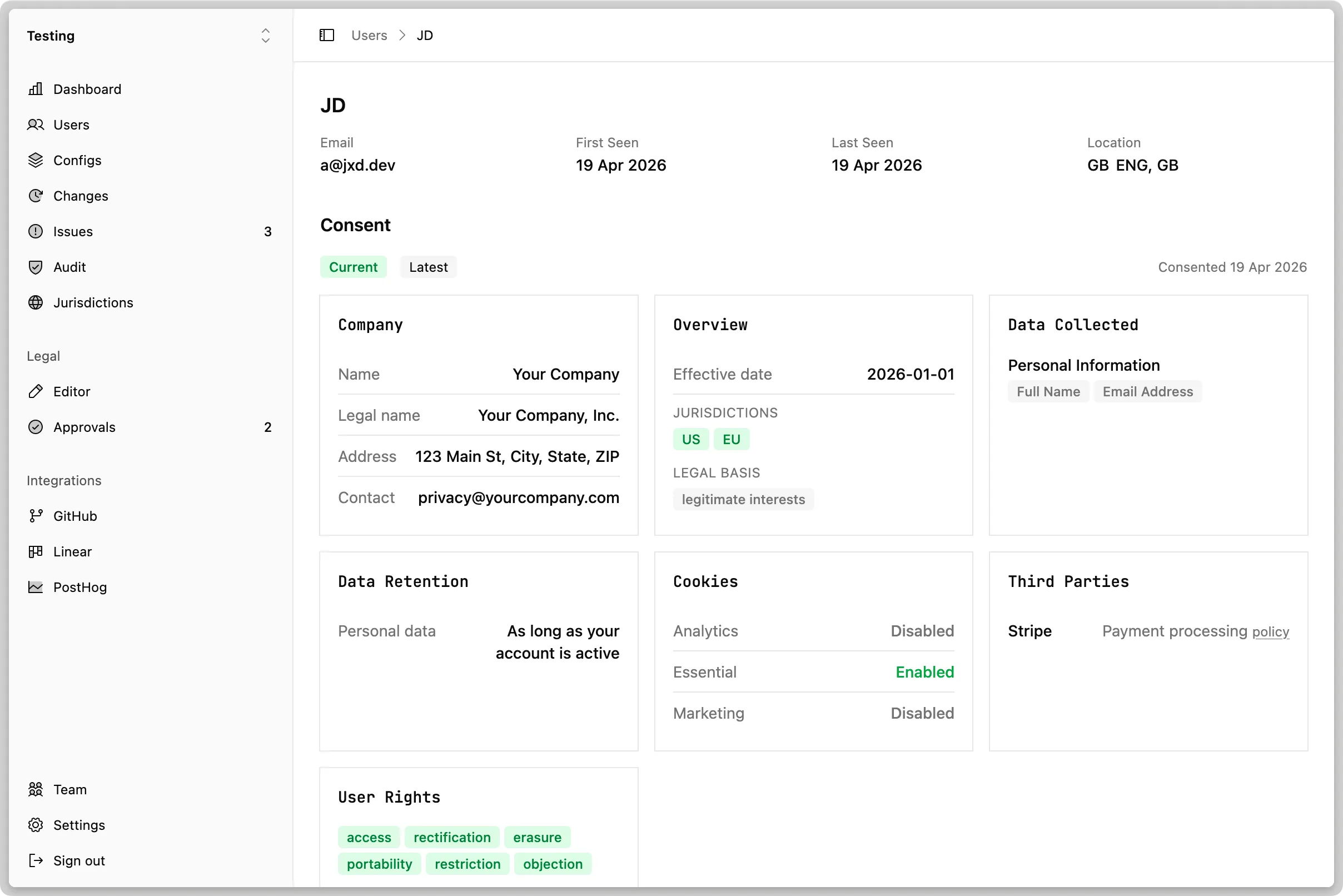
Drop it in
Install the plugin and add it alongside your other Better Auth plugins:
bun add @openpolicy/better-authimport { betterAuth } from "better-auth";
import { openpolicy } from "@openpolicy/better-auth";
import config from "./openpolicy";
export const auth = betterAuth({
plugins: [
openpolicy({
config,
apiKey: env.OPENPOLICY_API_KEY,
}),
],
});That’s it. Every signup and policy-relevant event now flows into OpenPolicy+ with:
- The exact policy version the user accepted, hashed from your
defineConfig - Timestamp, IP, and user agent
- A stable audit log you can export for legal, a DPA, or a regulator
Why the same config matters
The config you pass to the plugin is the same object that @openpolicy/vite and @openpolicy/cli use to render your privacy and cookie policies. That means the policy your users see and the policy they’re recorded as accepting can’t drift apart — they’re generated from a single source of truth, version by version.
When you update openpolicy.ts, the hash changes. OpenPolicy+ sees a new version, and every subsequent acceptance is pinned to it. Previous consent records stay attached to the version they were actually shown.
What’s next
Better Auth is the first of several auth integrations. If you use Clerk, Auth.js, or Lucia and want this pattern next, open an issue on GitHub.
Full docs at docs.openpolicy.sh. If you’re integrating OpenPolicy+ and want a hand, book a demo call.